

A buying day checklist for guest houses
A guest house buying day can drift if you arrive without a list, a budget and a route through the hall. This guide sets out a workable plan for owners and managers who want to compare properly and leave with useful next steps.
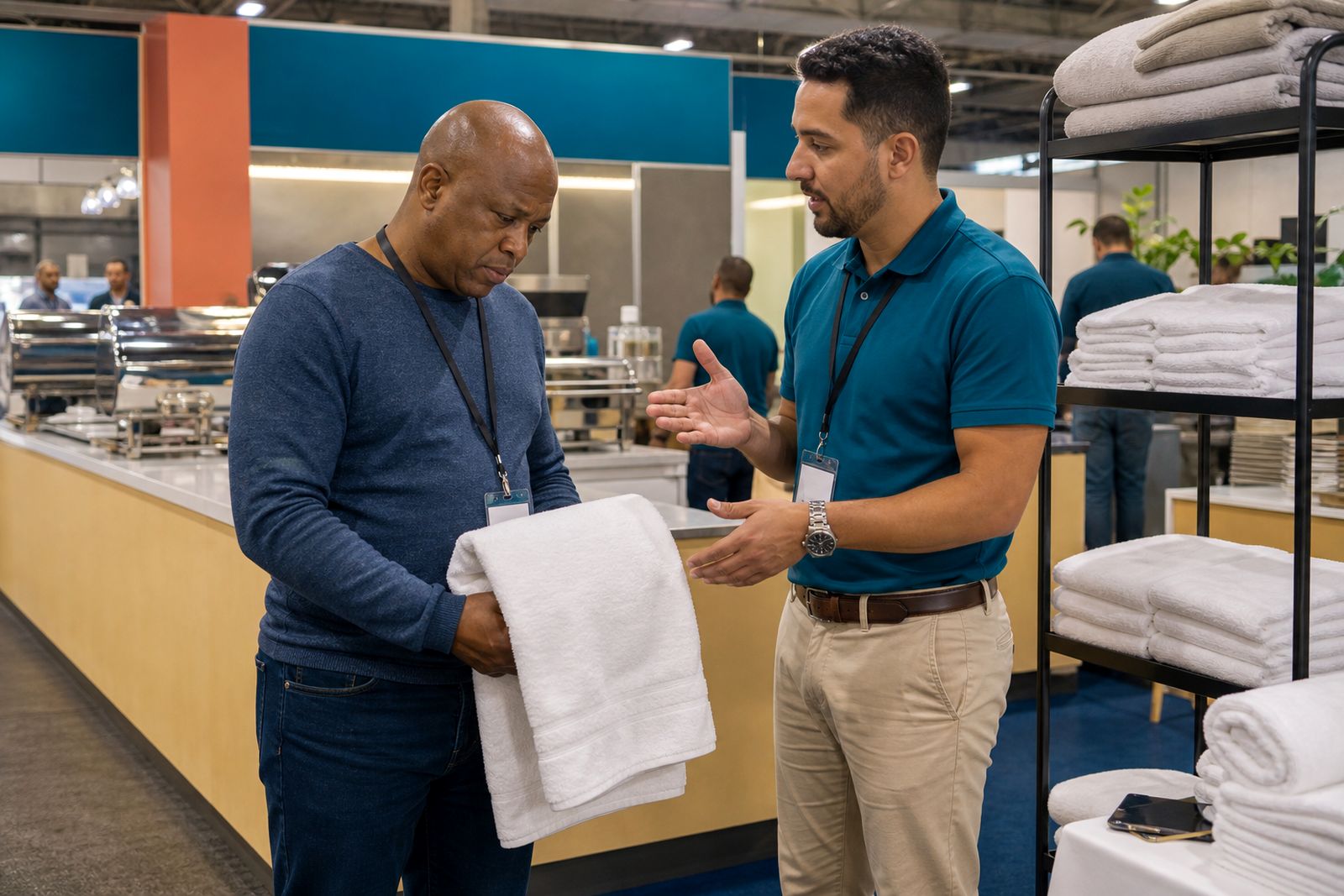
Start with the rooms that earn first
Guest house owners often arrive thinking about everything at once: beds, towels, coffee stations, breakfast service, booking software, outdoor seating and back-of-house kit. That usually leads to a long day of collecting brochures and not much else. A better approach is to rank purchases by the part of the property that affects guest experience first, then by items that are costly to replace later.
For most properties, the room and bathroom are where money should be tested first. Linen feel, mattress support, easy-clean surfaces and replacement cycles matter more than a decorative item that looks good under hall lighting. If your guest house runs at the coast, think about salt air, damp cupboards and laundering frequency before colour and trim.
- List the top three areas that affect guest reviews most.
- Separate urgent replacements from nice-to-have upgrades.
- Write down current sizes, quantities and problem items before you leave home.
- Carry photos of awkward room layouts, vanities and breakfast counters.
That short list gives you a buying brief you can actually use on the floor, rather than trying to remember measurements from memory halfway through the day.
Build a route before you enter the hall
Large trade halls reward people who know where they are going. If you walk every aisle in order, you can burn most of the morning on categories that are not even on your spend list. Use the floor plan and mark the exhibitors you need to see first, then add a second pass for comparison stands in the same category.
A sensible guest house route often starts with room stock and bathroom consumables, then moves to kitchen equipment for breakfast service, then furniture and front-of-house items. Booking systems and payment tools can fit into a quieter slot later in the day when your feet are tired and you are ready to stand still and ask detailed questions.
- Mark must-see stands before arrival.
- Group your route by product category, not by aisle number alone.
- Keep one time slot open for a return visit after lunch.
- Leave space for chef demos or talks only if they match your current buying plan.
If two decision-makers are attending from one property, split the route. One can cover kitchen and beverage operations while the other focuses on rooms, linen and booking admin. Meet later and compare notes while details are still fresh.
Carry the numbers exhibitors will ask for
Trade exhibitors can only give useful guidance if you bring the basic numbers. A guest house owner asking for a linen price without bed sizes, room count or wash frequency will only get a broad answer. The same applies to furniture, buffet kit and software. Good buying conversations happen when the exhibitor understands your occupancy pattern, available space and replacement schedule.
Write your figures on paper or keep them in your phone so they are quick to find. In Cape Town, many smaller properties run compact kitchens and mixed room types, so one wrong assumption on width or stack height can remove an option straight away.
- Total room count and bed configuration.
- Mattress sizes, base heights and headboard widths.
- Linen par levels and laundry routine.
- Breakfast covers on a full morning.
- Counter, scullery and storage measurements in millimetres.
- Whether delivery is to town, the Winelands, the Garden Route or the West Coast.
These details help you compare like with like. They also make it easier to spot when a product is aimed at a large hotel rather than a smaller guest house with tighter storage and staff limits.
Compare total operating cost, not only the stand special
A show floor can make a low ticket price look more important than it is. For a guest house, the smarter question is how an item behaves over months of use. A chair for a breakfast room may be affordable up front but costly if the finish marks quickly or the feet wear badly on tiled floors. The same goes for towels that lose handle after repeated washing, or small appliances that are awkward to clean between busy mornings.
Ask exhibitors about replacement parts, cleaning routine, stock holding and realistic wear points. For powered equipment, check running load and where it fits into your electrical setup. During periods of load-shedding, breakfast service equipment and payment systems need more thought than decorative purchases.
It helps to note four things for every serious option: unit price, expected service life, consumables or care cost, and any delivery or installation requirements. By the third or fourth stand you will see patterns, and the cheapest line on paper may not be the cheapest after a season of heavy occupancy.
Use demos and talks to test real working conditions
The programme is not only there for a break from walking. Chef demos, the barista arena and business talks can sharpen your buying decisions if you attend with a question already in mind. A guest house owner struggling with breakfast speed, coffee consistency or menu range can learn more from a live session than from a brochure alone.
Watch for practical details. How much counter space is used. How many steps the operator takes. How much steam, spill or noise a station creates. In a small dining room or compact service area, those details count more than a polished sales pitch.
One recent workshop example from a small coastal guest house makes the point well. The owner planned to replace a basic coffee setup with a larger service station after a busy holiday run. On the show floor, the team compared equipment stands in the morning, then watched the barista arena with their own breakfast volumes in mind. By the end of the day they had crossed out the larger option because the workflow would have overwhelmed their narrow counter and two-person morning shift. They left with a shorter list, better questions and a clearer fit for the property, which is far more useful than leaving with the most expensive machine on the hall.
Leave with a short action list, not a bag of paper
The final hour matters. Before you head out, stop for twenty minutes and sort what you collected. Mark each prospect as approve for quote, needs a site measure, not suitable, or revisit later. If you skip this step, the details blur on the drive home and half the day gets lost in leaflets.
For each exhibitor you want to follow up with, note the product name, quantity, size, finish and any delivery point conditions. Guest houses outside central Cape Town should also record access issues such as narrow stairs, limited parking or coastal exposure. Those practical notes prevent confusion when you continue the conversation after the show.
When you are ready to follow up with the show team about attendance or planning details, use our contact form. Keep your message tied to the category you are working on so the next step stays clear and tidy.
What our Hospitality customers say
Verified Google reviews
Questions we get asked
Should a guest house owner attend alone or with a manager?
If your buying list covers both rooms and food service, two people usually make better use of the day. Split the categories, compare notes later and keep one shared list of priorities and measurements.
How many product categories can I compare properly in one visit?
Most guest house teams can compare two or three categories seriously in a day without rushing. More than that often turns into browsing, especially if you want time for demos or business talks.
Is it worth bringing photos and measurements to the show?
Yes. Room photos, counter widths, mattress sizes and breakfast area measurements make conversations sharper and help exhibitors point out fit issues straight away.
Also worth a look


Tell us about the job
Send sizes, materials and where you are through our contact form, and we will come back with the practical options.
Open the contact form