

Chef demo theatre
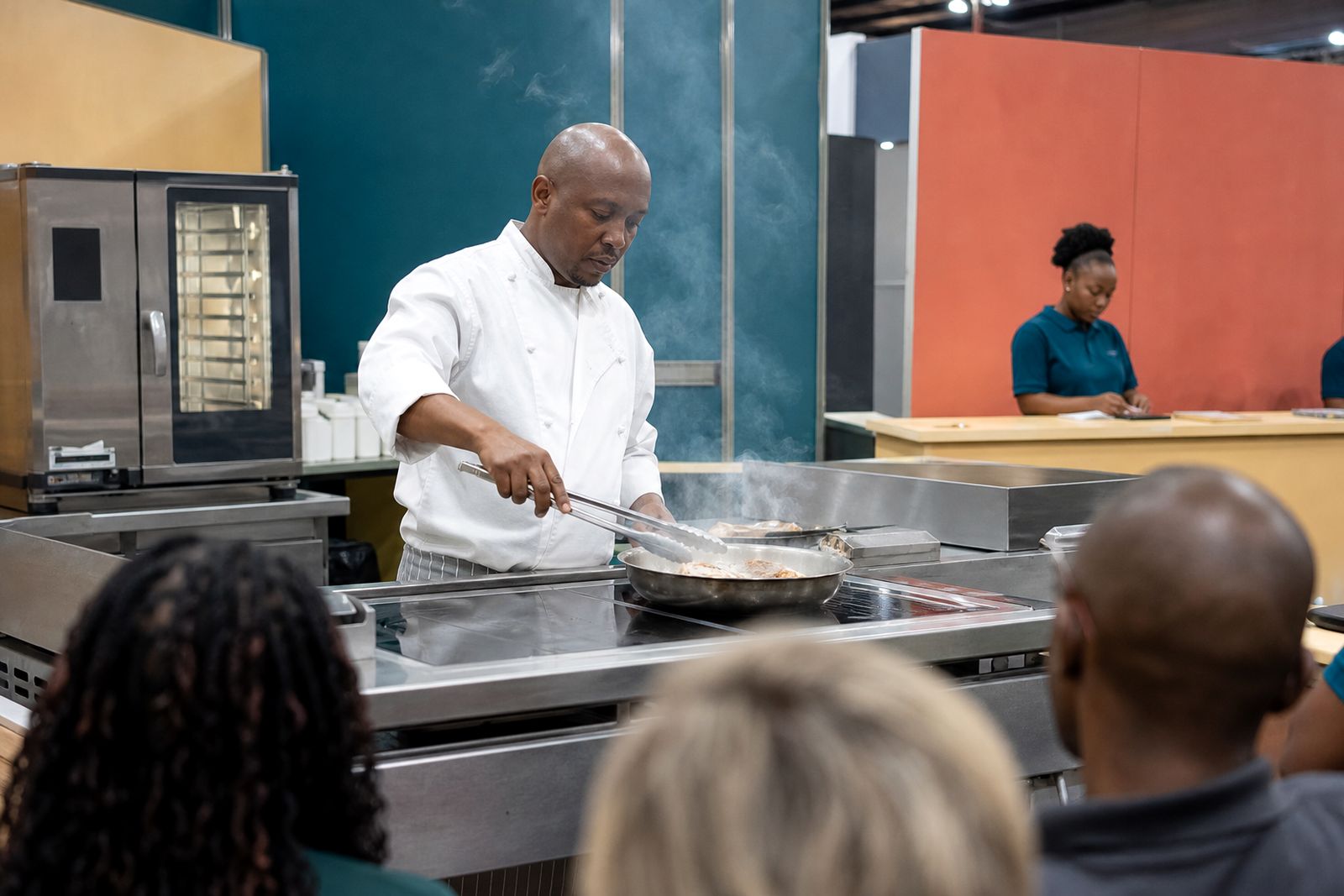
The chef demo theatre puts working kitchen equipment in front of trade buyers who want to see heat, speed and food output on a live floor. Sessions are built for hotel, guest house, restaurant and catering teams comparing methods, workflow and finish before they place orders elsewhere.
What the chef demo theatre includes
The theatre programme brings live cooking onto the show floor in a format that trade visitors can follow without blocking aisles or crowding exhibitor stands. Each session is scheduled as part of the wider show programme and paired with a presenter, a prep brief and equipment notes so buyers can understand what is being used and why.
Demonstrations focus on practical hospitality jobs rather than television style cooking. Visitors see batch prep, plating pace, holding methods, extraction, ventilation awareness, cleaning pauses and ingredient handling that matter in a commercial kitchen. It gives a much clearer picture than a static stand, especially for teams comparing output and footprint.
- Live cooking sessions on commercial kitchen equipment
- Chef presenters and moderated session flow
- Ingredient and prep coordination for approved demos
- Seated or standing audience zones, depending on the theatre layout
- Basic sound support for announcements and commentary
- Cleaning and reset windows between selected sessions
How a demo slot runs on the day
The day starts with access for approved presenters and support crew during the programme setup window. Equipment checks, ingredient drop off and bench layout are handled before the first audience enters, then each session runs to its slot time so the theatre stays useful to both visitors and nearby exhibitors.
A typical slot opens with a short introduction to the cooking task, the equipment setup and the menu item or technique being demonstrated. The presenter then cooks through the sequence while the moderator keeps commentary clear, helps with timing and flags key details for buyers such as pan capacity, recovery time, pass speed and cleaning points.
At the end of each session the team clears the working surface, removes waste and resets utensils before the next presenter moves in. That reset matters on a busy Cape Town show floor where airflow, food safety and foot traffic all need steady control.
- Arrival and access check for approved demo personnel
- Bench setup, smallware check and ingredient positioning
- Live session with moderated commentary
- Audience questions where the programme allows
- Clear down, waste removal and surface sanitation
- Reset for the following slot
What presenters and participating exhibitors must prepare
If you are appearing in the theatre, the strongest demos are the ones planned like a service run not a casual tasting table. Recipes need to fit the slot length, ingredients must be portioned before the session and every piece of equipment must match the approved power and space allowance. Oversized setups create delays for everyone, so the programme team checks the brief before confirming the final running order.
Presenters should bring a clear session outline, a kit list and handling notes for any item that creates steam, smoke, splatter or chilled holding requirements. If samples are part of the demo, portion counts need to be realistic. A theatre audience moves in waves and trays can disappear fast if the count is too low.
- Recipe or method summary for the session
- Full ingredient list with allergen notes where relevant
- Equipment dimensions, power draw and bench requirements
- Smallware, utensils and serving items needed for the slot
- Staff count for setup, service support and clear down
- Waste handling and cold chain notes for perishable goods
Programme planning and allocation
Chef demo slots are allocated as part of the show programme, with consideration for product relevance, audience interest and the practical limits of the theatre. A breakfast service topic may suit an early slot, while high heat cooking or plated mains often works better later once visitor traffic has built. The team also balances equipment categories so the theatre does not repeat the same method all day.
Where an exhibitor wants to support a chef appearance, the equipment brief is reviewed alongside floor safety and changeover time. The point is to show working hospitality solutions in a useful way, not to crowd the stage with too many units. On a real expo floor every extra trolley, oven stand or prep table affects movement and sightlines.
Registered exhibitors and approved presenters receive the operational information they need for access, loading points and theatre procedures through the show process. General visitors can view the published programme summary and plan their day around the sessions that match their buying list.
How costs are worked out
The theatre is part of the event programme, but participation costs are not priced as a single flat public item because setups differ. A straightforward demonstration using house theatre infrastructure is one thing, while a larger session with extra equipment, product handling needs or extended support is another. The final amount depends on the space used, technical demands and how the session fits within the approved programme.
Items that can affect cost include power load, refrigeration support, additional cleaning, session staffing, product storage, special benches and the amount of changeover time reserved. If an exhibitor is tying a demo to a stand campaign, the wider exhibitor package may also affect how the theatre activity is scheduled and costed.
For participation questions or planning details, use our contact form and state the cooking method, equipment footprint and preferred session format.
After the session and what visitors take away
A good chef demo does not end at the last plated sample. Buyers usually leave with a clearer sense of capacity, finish consistency, operator workload and whether a piece of kit belongs in a city hotel kitchen, a Winelands restaurant or a smaller guest house with tighter prep space. Seeing heat-up behaviour and recovery under live use can save plenty of guessing later.
After each session the theatre team handles the basic closeout for the area and keeps the programme moving. Follow-on commercial discussions about equipment, ingredients or kitchen systems happen directly between buyers and the relevant exhibitors on the floor. HostEx Cape does not sell the equipment shown in the theatre and does not process hotel bookings or catering orders.
If you want to take part in a future theatre programme, send your session concept through our contact form with your stand details and operating notes.
What our Hospitality customers say
Verified Google reviews
Questions we get asked
Can any exhibitor run a chef demo?
Demo participation is subject to programme approval, theatre capacity and the practical fit of your equipment and cooking method.
Are food samples always handed out?
Not every session includes tasting. Sample service depends on the demo brief, portion planning, food handling requirements and the approved session format.
Do visitors need separate registration for the chef demo theatre?
The theatre forms part of the show programme for registered trade visitors, with access managed according to floor capacity and session timing.
Tell us about the job
Send sizes, materials and where you are through our contact form, and we will come back with the practical options.
Open the contact form