

Exhibitor manual
This manual brings the working notes exhibitors need before move-in at HostEx Cape. Use it to brief your stand crew, plan deliveries and avoid delays at the hall.
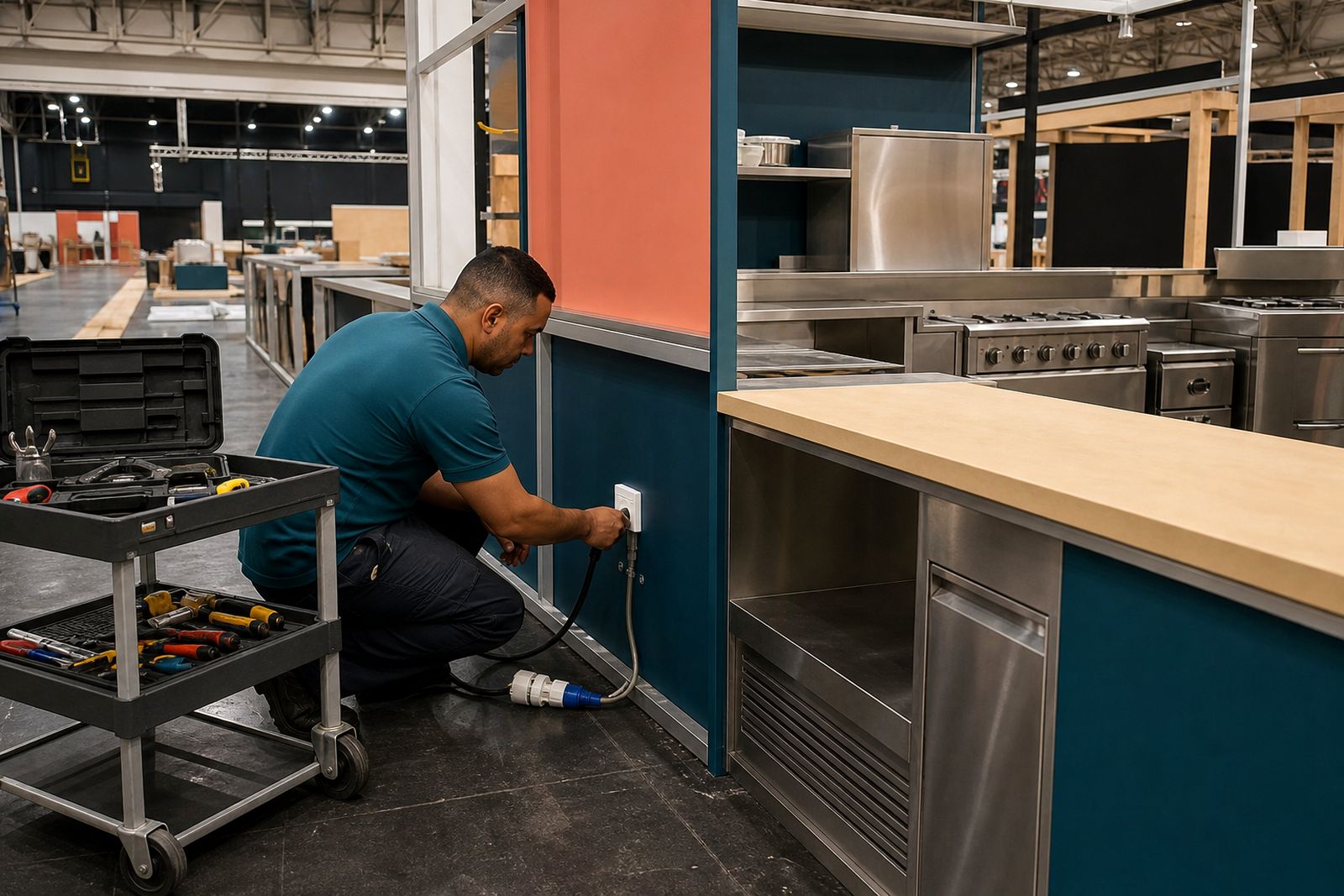
Read these notes before your stand crew arrives
Every exhibitor should circulate this manual to the person arranging transport, the stand contractor, the staff working the stand and anyone bringing equipment into the hall. It cuts down the usual problems at trade shows: late vans at the loading point, missing plugs, unlabelled boxes, loose stock in gangways and food sampling that has not been cleared properly.
Your stand position, service points and the latest hall layout are issued to registered exhibitors. Keep those documents with your vehicle passes and stand paperwork. If your team is travelling in from the Winelands, the Garden Route or further inland, pack for Cape Town conditions rather than inland assumptions. Coastal humidity affects cartons, labels can lift, and metal items left uncovered overnight may pick up moisture.
- Share the hall plan and stand number with every driver and installer.
- Label every crate, carton and loose item with your company name and stand number.
- Bring extension leads, adaptors and cable covers suited to your own equipment load.
- Pack cloths, bin liners, tape, cleaning spray and basic hand tools for touch-ups.
- Keep copies of service requests and contractor details on site.
Build-up access, unloading and empty packaging
Move-in runs more smoothly when vehicles arrive in order and unload only what can be taken straight to the stand. The loading zone is a shared working area, not a parking bay for sorting stock. Drivers should stay with the vehicle until hall staff direct them to unload. Once goods are offloaded the vehicle must leave the bay so the next exhibitor can use it.
Bring trolleys that suit your own products. Small castors struggle over joins and thresholds, especially with heavy catering equipment or display fridges. If your stand includes tall walling or hanging signs, measure every part against the access route before dispatch. A piece that fits the stand but not the service door causes a very long morning.
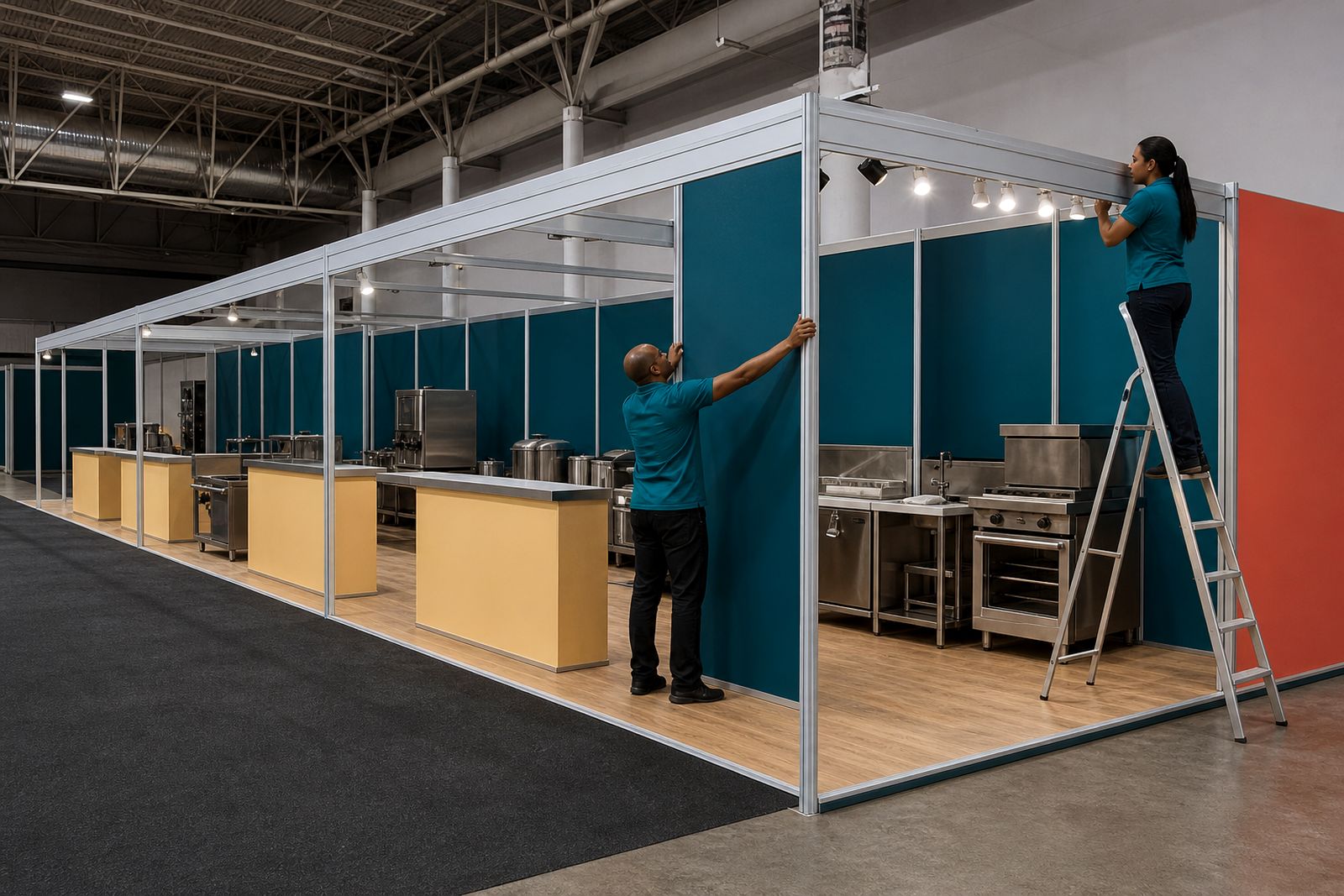
Empty boxes and spare pallets should be removed from the stand as soon as packing is complete. Do not stack empties behind shell scheme panels, inside service recesses or in gangways. Keep one small carton for hand stock and daily consumables if needed, but the stand itself must remain tidy and safe for visitors.
- Book drivers for the correct unloading window issued with exhibitor information.
- Unload by stand sequence where possible, not by random carton order.
- Use protective wrapping on polished furniture, glassware and painted panels.
- Remove pallets, crates and shrink wrap during build-up, not once visitors are inside.
- Keep gangways clear at all times, even during the busiest hours of set-up.
Power, lighting, water and equipment connections
Do not assume the basic stand supply will run every appliance you bring. A coffee machine, grinder, display chiller, screen and undercounter unit on one line can trip a circuit very quickly. Add up the actual load for each item and order the correct supply in advance. Any equipment with a high start-up draw should be declared, even if it only runs for short periods during demos.
Bring equipment in good working order with plugs fitted correctly and cables free of damage. Leads must not cross open gangways without proper cover, and connections should stay within your stand footprint unless a venue technician has approved another route. Multi-plugs bought for office use are often not suitable for a busy exhibition floor.
Water points are limited to approved positions. If your stand needs a sink, rinse point or machine feed, request it early so the service line can be planned against the hall layout. Waste water may only discharge to the designated connection point. Nothing should be emptied into floor drains unless the venue team has directed it there.
- List each appliance with wattage before ordering power.
- Separate lighting load from equipment load where possible.
- Bring spare globes or fittings for non-standard display lights.
- Test pumps, chillers and heating elements before dispatch to the show.
- Keep all service areas accessible for inspection during build-up.
Food, beverage and sampling rules on the stand
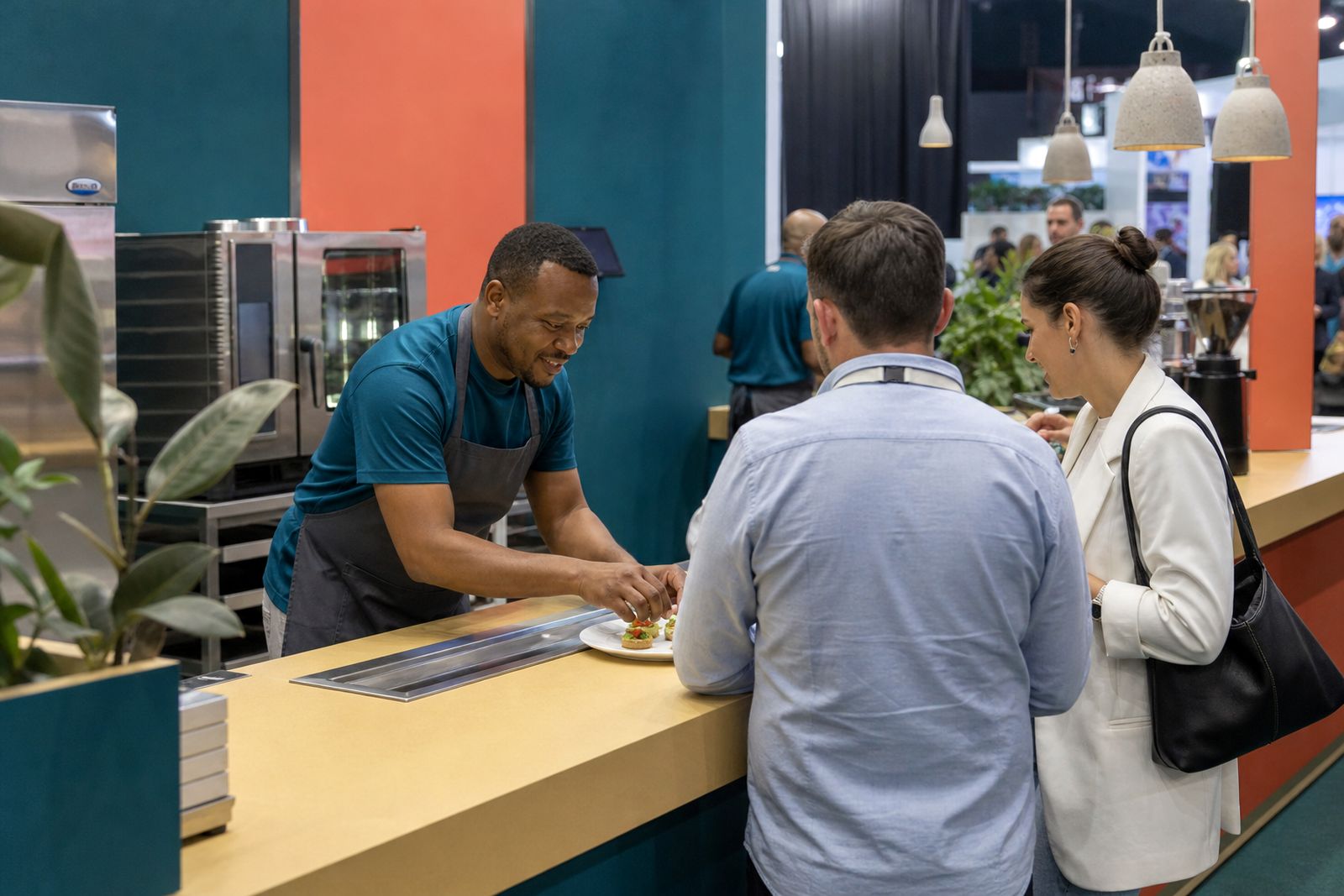
HostEx Cape welcomes food and beverage sampling, chef activity and barista service within the approved programme and exhibitor rules. Any exhibitor preparing, heating, chilling or handing out consumables must work to basic hygiene standards from the moment stock enters the hall. Cold products need proper temperature control, hot items need safe holding, and open tasting portions should be protected from casual handling by passers-by.
If you are bringing fresh produce, dairy, meat, baked goods, coffee, syrups or ready-to-drink samples, plan storage in small daily quantities rather than sending everything to the hall floor at once. Cape Town afternoons can warm up quickly even when the morning starts grey. Waste bins should be lined, cleared often and kept out of visitor walkways.
Alcohol service, if permitted for your stand activity, must follow venue and licensing rules exactly. Do not pour for underage visitors, and do not let queues spill into the aisle. Open flame, deep frying, heavy smoke and any process likely to trigger alarms need prior approval and may be refused inside the hall.
- Use gloves or utensils where direct hand contact would be unhygienic.
- Store cleaning chemicals away from edible stock and serviceware.
- Keep allergen information on hand for staff serving samples.
- Bring enough refrigeration or insulated storage for the volume you plan to offer.
- Remove food waste regularly so odours do not build up by mid-afternoon.
Staffing, housekeeping and trading through the day
The best run stands usually have one person watching stock, one speaking to buyers and one handling demos or machine operation. That matters more than a crowded stand full of people talking among themselves. Brief your team on the buyer profile for this show: hotels, guest houses, restaurants, caterers and multi-site hospitality groups. Staff should know what can be quoted later, what can be demonstrated on the day and who is logging lead details.
Keep personal bags, lunch packs and spare jackets out of sight. Sound should stay at a level that supports conversation with trade visitors, not a level that swallows the neighbouring stand. If you are running timed demos, start and finish when listed so the programme across the hall stays usable for visitors moving between feature areas.
Wipe counters often, restock neatly and check the floor edge around your stand during the day. One loose cable or split sample tray can turn into a slip risk very fast. A clean stand reads better and sells the conversation better too.
Before you leave the hall on the final day
Breakdown should start only after the hall has closed to visitors and the release has been given for exhibitors to dismantle. Early pack-down looks poor and creates hazards in aisles where people are still walking with samples, catalogues and luggage. Once the hall opens for breakdown, remove small valuables first, then loose stock, then graphics and structure.
Book your collection vehicle with enough time for the queue at the loading area. Rushed pack-out usually causes the damage that careful build-up avoided. Check the stand footprint for tape, cable ties, sample cups, oil drips and any damage before you sign off with your contractor and leave.
- Confirm all hired items are separated from your own property.
- Pack blades, tools and fragile parts into marked cartons, not mixed loose boxes.
- Remove all perishable stock from the venue on the same day.
- Take waste to the correct collection point, not the nearest aisle corner.
- Keep one supervisor on site until the last item has been loaded.
If a service point, stand alteration or operational detail is unclear, send it through our contact form well before your goods are dispatched.
What our Hospitality customers say
Verified Google reviews
Questions we get asked
Can we send stock directly to the venue before move-in?
Only send goods in line with the delivery instructions issued to registered exhibitors. Unscheduled freight can be refused if there is no signed receiving arrangement or no way to identify the stand.
May we prepare coffee and food samples on the stand?
Yes, where the stand activity has been approved and the correct power, water and hygiene arrangements are in place. Higher risk cooking methods and any alcohol service must follow venue rules and any licensing conditions.
Do shell scheme stands include enough power for catering equipment?
Not always. Basic supply is often suitable for light display use, but coffee equipment, chillers, heating units and screens can exceed it. Work from the actual wattage of each appliance before ordering services.
Also worth a look
Tell us about the job
Send sizes, materials and where you are through our contact form, and we will come back with the practical options.
Open the contact form