

Planning a hospitality expo stand
A good expo stand does more than look busy. It gives trade buyers a fast reason to stop, understand the offer and carry the conversation forward after the hall clears.
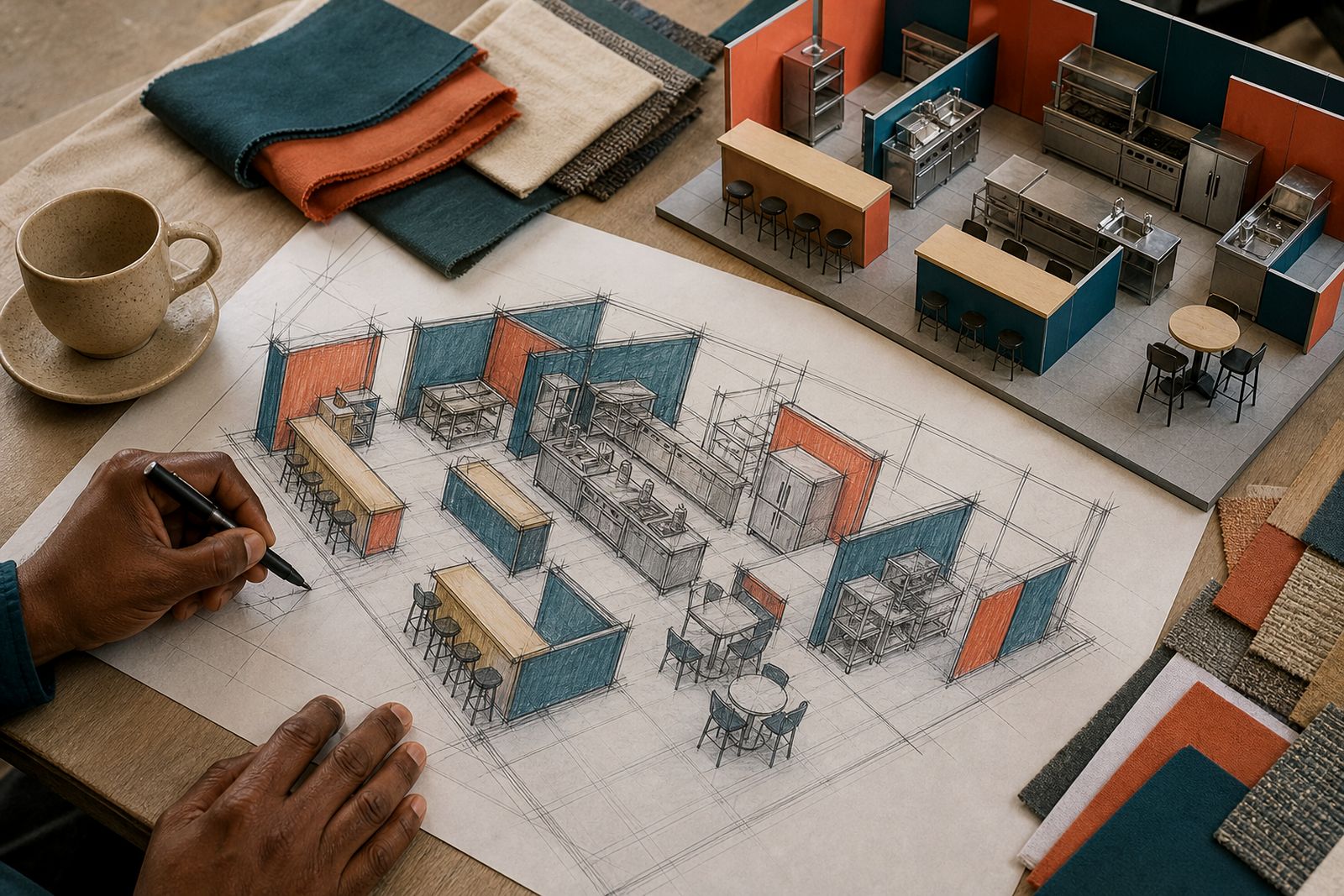
Start with one buying problem, not the whole catalogue
Many exhibitors lose people in the first ten seconds by trying to show every product line at once. Trade buyers walk a hospitality expo with a shortlist in mind: replacement ovens, tougher banquet chairs, fresher coffee options, cleaner linen handling, easier room booking software or a better back-of-house layout. If your stand answers one of those problems quickly, the rest of the range can follow in conversation.
Choose the main thread before any graphics, shelving or tasting plan is booked. A kitchen equipment exhibitor might lead with small-footprint prep flow for city hotels. A linen company might build the message around laundry life in coastal humidity. A food and beverage team might focus on breakfast service margins for guest houses where waste hurts.
- Pick one lead message that fits on a short stand header.
- Group supporting products under that message rather than by internal department.
- Set aside items that need long explanation and show them only when a buyer asks.
- Decide what a visitor should remember after one quick aisle-side glance.
This early choice makes the rest of the stand easier to plan and stops the usual clutter that drains attention.
Build the floor layout around movement and stopping points
On a busy show floor, layout matters more than many teams expect. Buyers do not enter a stand the way they enter a shop. They drift in from one side, pause halfway through a demo, or lean in from the aisle while speaking to a colleague. A stand that only works from the front can feel closed off even when the team is friendly.
Keep the front edge open. Avoid placing the hero item where it blocks entry or forces people into a queue. If tastings are part of the stand, serve them from one side so the centre stays clear for discussion. Storage should sit behind a clean wall line, not under every counter where boxes and extra stock become visible by mid-morning.
A useful rule is to create three zones: attraction at the aisle, conversation in the middle and detail deeper in the space. The attraction zone could be a plated sample, a coffee grind aroma, a compact furniture setting or a live software screen. The middle is where staff can qualify the visitor. The final area handles samples, brochures, spec sheets and ordering detail.
- Leave enough width for two people to stop without blocking the aisle.
- Keep tasting queues out of the main discussion area.
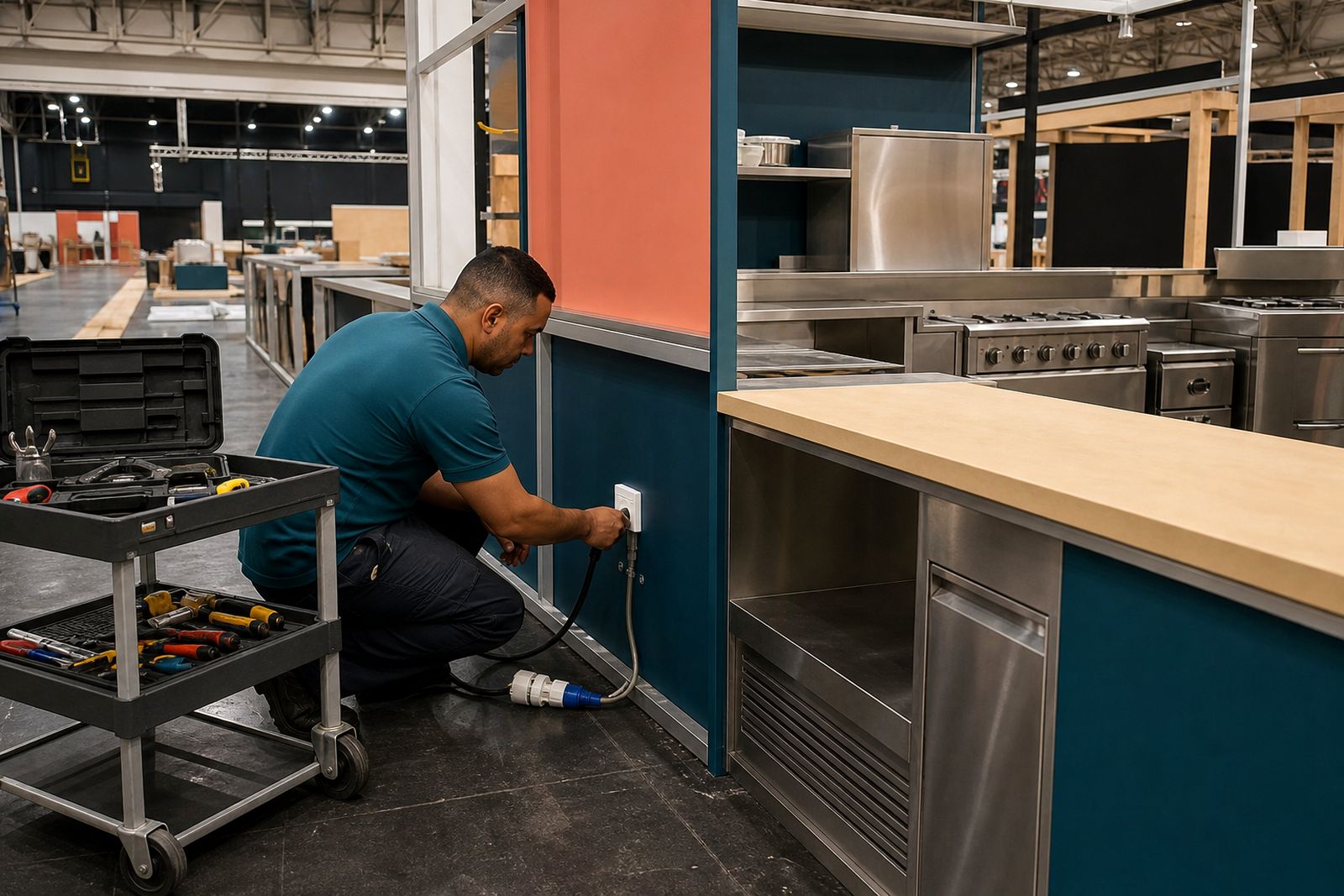
- Put power-hungry equipment where cables can be managed neatly and safely.
- Store extra cups, napkins, tasting portions and literature out of sight.
When the plan respects how people really move, the stand feels calmer and buyers stay longer.
Give the team a job map before the hall opens
Even a well-built stand can underperform if every staff member does the same thing. Hospitality buyers notice quickly when nobody knows who handles technical questions, who runs samples and who writes down the lead properly. A job map helps the stand feel organised without feeling stiff.
One person should work the aisle edge and open conversations. Another should handle deeper technical or operational questions. If there is a live food or beverage element, keep one operator focused on consistency rather than splitting that role with sales chat. Where equipment is running on mains power, test the sequence well before visitors arrive because a rushed reset at the wrong moment empties a crowd fast.
It also helps to decide what counts as a useful lead. A regional guest house owner asking for linen sample packs needs a different note from a hotel group comparing several categories for a refurbishment. Short written notes matter. By late afternoon details blur a bit, and memory alone is not enough.
- Assign an opener, a technical closer and a sample or demo operator.
- Agree the three questions every serious visitor should be asked.
- Keep a simple lead sheet with business type, town, product interest and next step.
- Rotate breaks so the stand never feels unattended.
Tastings and demos need control, not volume
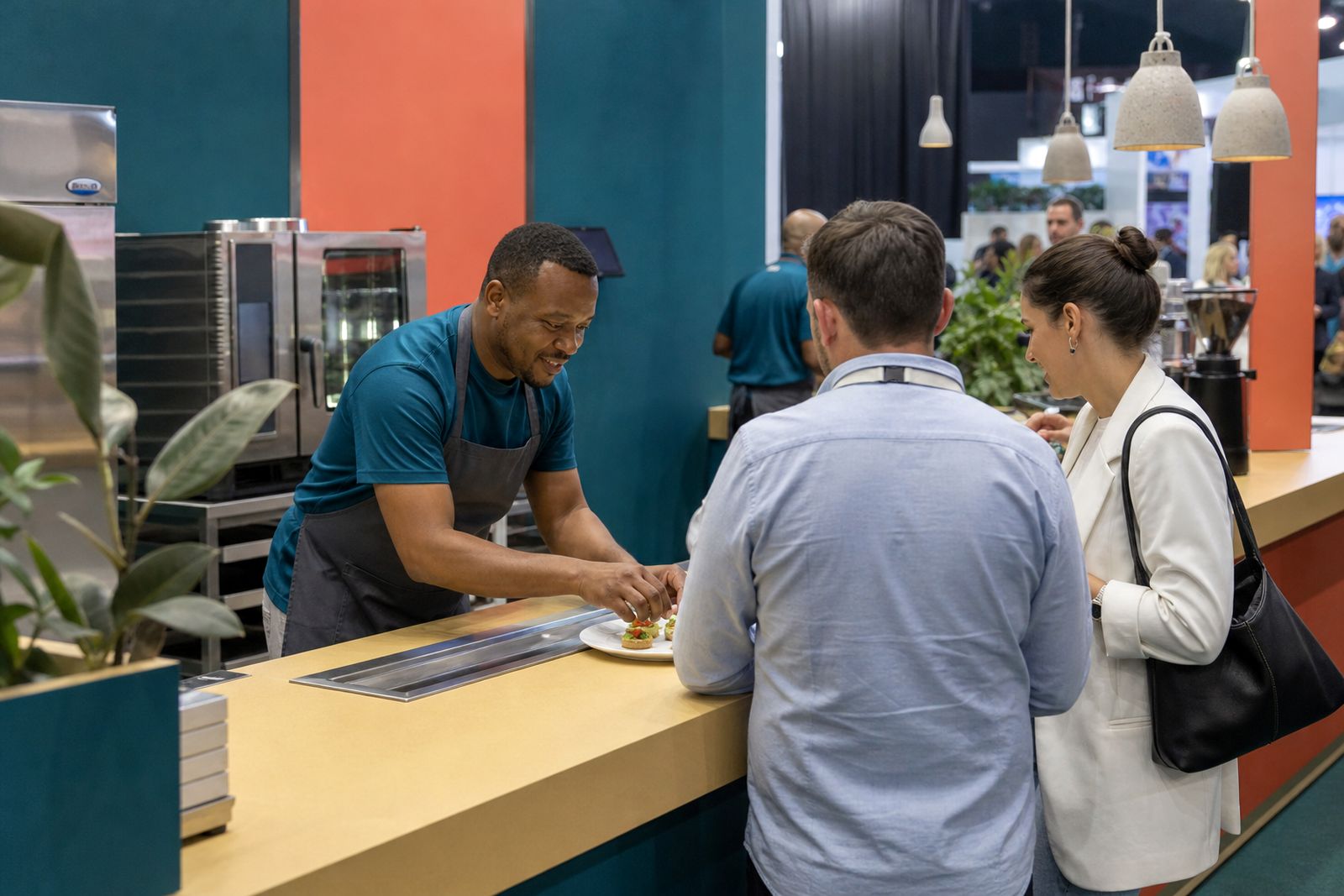
A chef demo or tasting element can pull a strong crowd, but noise and rush can bury the actual sales conversation. The best live stands treat samples as a doorway not the entire show. Portion size should be small enough to serve quickly and clear enough to show the point. If the product story is consistency, hold temperature and timing tight. If the story is menu margin, explain yield in plain figures.
For beverage exhibitors, aroma often pulls better than a loud pitch. For food exhibitors, garnish should not slow service. For equipment exhibitors, a demo should show the result and the operator movement around the machine, not just the finished plate. In Cape Town, many buyers think hard about space, staff training and utility costs, so practical detail lands better than theatre.
Keep the service surface clean and reset often. A stand can look tired by midday if used cups, skewers and napkins sit too long. That sounds obvious but it slips on busy halls. If allergens matter, label clearly and brief the team properly.
A workshop example from the Cape trade
One Western Cape workshop prepared a stand for a hospitality audience by cutting the range down to three working displays: a compact prep line, a plated pass and a storage section. The original plan tried to show every stainless unit they could transport. On paper it looked impressive, but the aisle view was crowded and the central message disappeared.
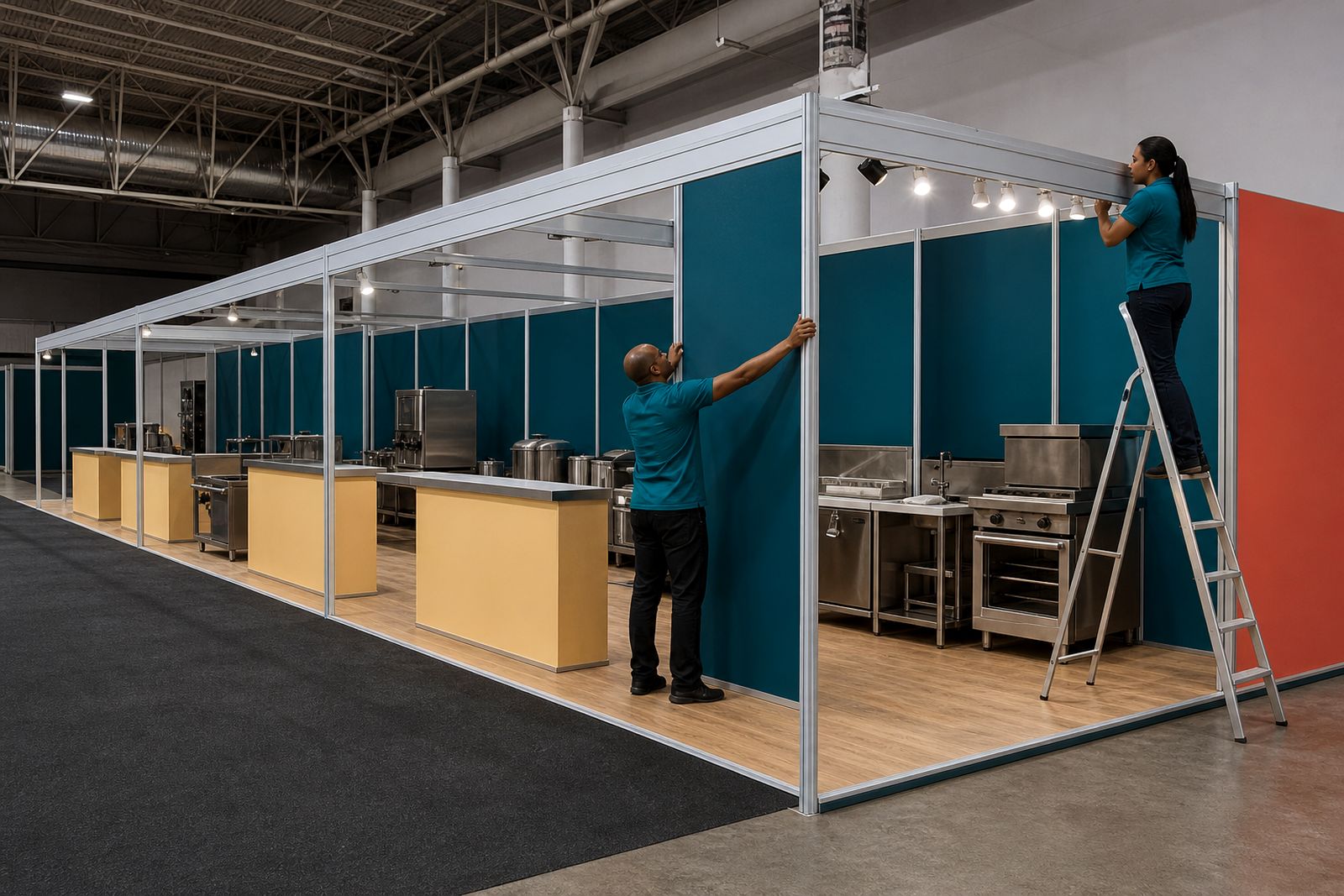
After a floor mock-up in the workshop, the team removed nearly half the pieces. They widened the front opening, moved stock cartons behind a plain partition and set one clear talking point at each display. The prep line dealt with speed in a tight kitchen. The plated pass showed workflow for service periods. The storage section focused on hygiene and access. Nothing fancy, just better order.
They also changed staffing. Instead of four people speaking at once, one person greeted, one handled technical sizing and one wrote lead notes. The result was fewer muddled chats and more specific conversations with hotel and restaurant buyers from outside Cape Town. That kind of stand does not need gimmicks, it needs discipline.
Leave with leads that can still be used on Monday
The final measure of a stand is not how busy it looked from the aisle. It is whether the team leaves with usable information. Hospitality buying cycles vary. A guest house owner replacing breakfast service items may move quickly, while a hotel refurbishment team can spend weeks comparing layouts, finishes and operating costs. Your notes should make sense when the noise of the hall is gone.
Before the show opens, decide how you will sort contacts. Category by category works well: kitchen, furniture, beverage, linen, software. Add the town or region where useful because needs in the Winelands can differ from a coastal property with salt air and tighter storage rooms. If sample follow-up is part of the plan, record exactly what was requested rather than writing a vague line that nobody can act on later.
- Capture business type and property size where the visitor shares it.
- Note whether the interest is immediate buying, budgeting or research.
- Record any site constraints such as narrow doors, laundry volume or menu style.
- Separate firm opportunities from casual brochure collection.
If you are weighing up your stand plan for HostEx Cape, our contact form is the place to ask about exhibitor details, floor options and the practicalities around the hall.
What our Hospitality customers say
Verified Google reviews
Questions we get asked
How much product should we bring onto the stand?
Bring enough to support the main story of the stand, not the full range. A tighter display is easier to understand and leaves more room for real conversations.
Should we offer tastings if we also have technical products to sell?
Yes, if the tasting supports the commercial point rather than distracting from it. Keep portions small, service neat and the explanation tied to yield, consistency or menu use.
What is the biggest planning mistake exhibitors make?
Trying to speak to every type of buyer at once. A stand with one clear message, a workable layout and defined staff roles usually performs better than a crowded all-in display.
Also worth a look
Tell us about the job
Send sizes, materials and where you are through our contact form, and we will come back with the practical options.
Open the contact form