

Marketing your stand
A good stand plan starts before the hall opens and carries on after the aisles clear. This guide covers buyer invitations, live activity on the stand and the lead follow-up work that turns a busy show into sales meetings.
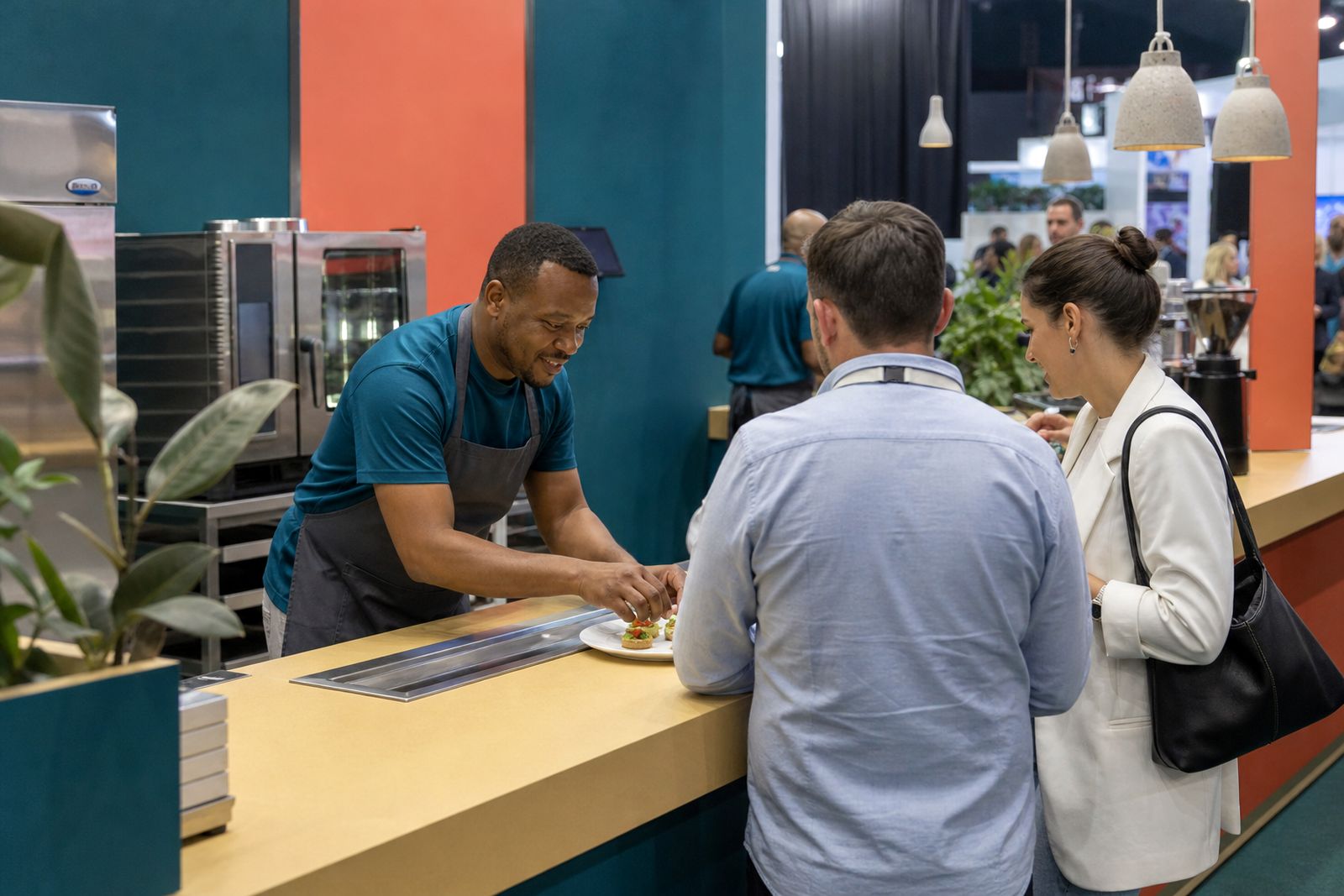
Start with one clear reason to visit
Trade buyers walk a hall with a shopping list in mind. Hotel operators may be comparing kitchen kit, linen ranges and booking systems in one pass, while restaurant groups often split the team across several categories. If your stand tries to say everything at once, people slow down, glance over the fascia and move on. Pick one lead message that a buyer can understand from the aisle in a few seconds.
That message should match what you want from the show. If the main aim is to launch a new range, build the stand conversation around that range. If the aim is appointments with procurement teams, make the stand feel set up for proper trade discussions, not only sampling or spectacle. Keep the wording plain and commercial, with product names, capacities, sizes or service scope where it helps.
- Choose one headline offer or product family for the front of the stand.
- List two or three buyer benefits in trade language, not ad copy.
- Show practical details such as dimensions, finishes, output or package options.
- Make sure every staff member can explain the same core message.
Invite the right buyers before the doors open
Exhibition traffic matters, but pre-show invitations matter more. The strongest stands usually arrive with meetings already pencilled in by branch managers, chefs, owners and purchasing teams from Cape Town, the Winelands and the Garden Route. A buyer who knows why they are stopping by is more likely to spend ten minutes at your stand than ten seconds.
Build a list from your current trade contacts, dormant accounts and prospects you have been trying to meet in person. The invitation should tell them what they can do on your stand: compare a range, test a process, see a live demo, review a menu costing tool or sit down with the sales team. If you are launching something specific, say so plainly. Keep the message local to the show and relevant to hospitality operations.
- Segment your invitation list by sector: hotel, guest house, restaurant, catering and group buying.
- Offer appointment slots for buyers who need a quieter conversation.
- Tell invited visitors which staff roles will be on the stand.
- Prepare a short reminder message for the week of the show.
- Bring a printed meeting sheet so the stand team knows who is due and when.
If your company works through regional reps, brief them properly before they travel. They should know which accounts are attending, which products to push first and which decision makers still need a face to face introduction. A little prep here saves a lot of muddled stand chat later.
Plan demos that stop traffic without blocking the aisle
Live activity draws people in, but only when it is easy to follow from a trade buyer's point of view. Chef-led cooking, coffee service, small equipment trials and software walk-throughs can all work well, provided they answer a buying question. A demo that shows speed, consistency, cleaning time or portion control is usually more useful than a long sales pitch.
Map the physical flow before you arrive. Visitors need enough space to pause, watch and then step closer for questions. If the crowd spills into the aisle, the stand can become hard to enter and serious buyers may leave rather than squeeze through. Time the demo so that staff can reset quickly between groups, and keep consumables and handout stock where they do not clutter the front edge.
- Write a demo script with a start, a key proof point and a close.
- Keep each live session short enough for aisle traffic patterns.
- Use simple signs showing the next demo topic rather than long paragraphs.
- Assign one person to present and another to capture leads.
- Check extraction, water and waste rules if your stand activity needs them.
Cape Town halls can feel different across the day with coastal damp in the morning and warmer air later on, so test any printed menus, labels or packaging samples that may curl or mark easily. Small handling details make a stand feel sorted, even when the hall is busy.
Give the stand team jobs, not just badges
A full stand can still underperform if nobody knows who is greeting, qualifying or closing. Buyers notice this very quickly. One person should catch passing interest, one should handle technical detail, and one should keep scheduled meetings on track. If everyone talks at once, conversations become shallow. If everybody waits for somebody else to start, good leads drift off.
Before the show, agree on the questions that qualify a visitor. Ask what type of operation they run, how many sites they manage, whether they are replacing, expanding or opening, and what timescale the project is on. Those details help you sort a casual browse from a real buying brief. They also make follow-up more useful because the next conversation starts with context rather than guesswork.
Keep personal phones off the stand unless they are being used for lead capture or product material. Buyers notice distraction. Water, notebooks, chargers and price files should be tucked out of sight so the stand looks ready for business all day long.
Capture leads in a way your sales team can actually use
Most exhibitors lose value after the show because notes are thin, handwriting is unclear or every conversation gets marked as hot. A badge scan on its own is not enough. You need enough detail for the next step to make sense: product interest, branch location, buying stage, budget range where relevant, and whether a sample, quotation or site visit is needed.
Use one lead form format for the whole team. Paper can work, tablets can work, but the fields must be the same. If one rep writes long notes and another only ticks boxes, the sales pipeline ends up uneven and hard to manage. Add a priority ranking that means the same thing to everyone and keep it honest, otherwise the post-show list becomes noisy very quickly.
- Record the visitor's operation type and location.
- Note the product or service discussed in specific terms.
- Mark whether they want pricing, a sample, a meeting or technical information.
- Capture any delivery or installation constraints they mention.
- Log who on your team spoke to them so handover is clean.
Follow up while the conversation is still fresh
Good follow-up is not a generic thank-you message to every scanned badge. It is a proper next step linked to the stand discussion. Send the information that was actually requested, attach the product sheet that matches the conversation and note any action needed from your side. If a hotel group asked for back-of-house equipment layouts and a guest house owner asked for a small linen range, those should not be treated the same way.
Sort leads by urgency and value as soon as the show closes. Large projects, group procurement opportunities and live tenders belong at the top. Mid-level prospects can move into scheduled sales calls or showroom meetings. Early-stage contacts may need a softer sequence of product information and case examples. The point is not volume. The point is relevance and clean records, that is what helps the show pay for itself.
It also helps to review your own stand performance while details are still fresh. Which demo drew the best quality buyers, which invitation list produced actual meetings and which message people remembered from the aisle? Those notes will sharpen the next show far more than a vague sense that the stand felt busy.
What our Hospitality customers say
Verified Google reviews
Questions we get asked
Should we focus on samples or scheduled meetings?
Usually both, but not in equal measure. Samples and live activity pull people in from the aisle, while booked meetings give your team time with buyers who already have a project or range review in mind. Plan the stand so one does not interrupt the other.
How many products should we feature on the stand?
Fewer than most exhibitors think. A tight range with clear pricing logic, finishes, capacities or service options is easier for trade visitors to understand than a crowded display. Keep secondary lines for follow-up material or deeper conversations.
What makes lead notes useful after the expo?
Useful notes show who the visitor is, what operation they run, what they asked about and what the next action should be. Product names, quantities, site location and buying stage are more valuable than general comments like interested or call later.
Also worth a look
Tell us about the job
Send sizes, materials and where you are through our contact form, and we will come back with the practical options.
Open the contact form